
VLF vs Pulse Induction vs Multi-Frequency: How Metal Detectors Work
CoilAndCoin is reader-supported. If you buy through our links we may earn a commission at no extra cost to you. As an Amazon Associate we earn from qualifying purchases. Disclosure.
Every detector works the same basic way, according to Garrett: the coil sends a magnetic field into the ground, and metal disturbs that field and sends a signal back. The differences are in how that field is sent and read.
The three technologies (Garrett)
| VLF | Pulse induction | Multi-frequency | |
|---|---|---|---|
| How it transmits | Steady, continuous sine wave | Rapid bursts of high-voltage current | Several frequencies at the same time |
| What it reads | Phase shift of the signal | How quickly the reflected signal decays | All frequencies together |
| Strength | Discrimination, Target ID | Depth in mineralized soil and saltwater | Mixed terrain and ground interference |
| Weak spot | Mineralized soil and saltwater | Discrimination | More controls and settings to learn |
| Power use | Low | High | Moderate |
What frequency changes
Garrett says lower frequencies tend to perform better at depth and on highly conductive metals, while higher frequencies are better at picking up small or delicate, lower-conductivity targets. Minelab says the same about its Multi-IQ: low for bigger, deeper objects, high for small or thin targets near the surface. Gold-focused VLF detectors run high: the Gold Monster 1000 at 45 kHz and the AT Gold at 18 kHz, whose listing says it's for small gold nuggets (see gold detectors).
Target ID and ground balance
- Target ID: Minelab says advanced detectors measure conductivity and magnetic properties and assign a Target ID number. Scales differ between brands and models.
- Ground balance: Minelab says it neutralizes the effect of mineralization by filtering out signals from the ground, which can otherwise weaken or alter real target signals.
What affects depth
Minelab says detection depth depends on soil conditions, the size and type of target, and the detector's technology. Larger coils can detect deeper but are more prone to electromagnetic interference, and flat or broad targets are easier to detect than thin or irregular ones. For coin-sized targets, it says most high-performance detectors find objects 6 to 12 inches deep in optimal conditions.
Examples by technology
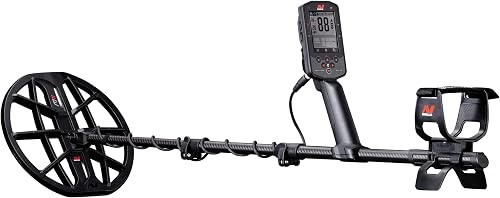
Single frequency: Garrett ACE 400 (10 kHz). Selectable single frequency: Minelab X-Terra Pro. Simultaneous multi-frequency: Minelab Manticore (Multi-IQ+, 5 to 40 kHz) and Vanquish. Compare them in our Minelab guide and beginner guide.
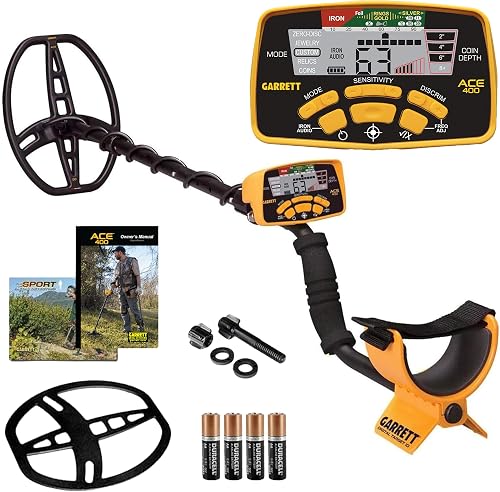
Garrett ACE 400 Metal Detector
- Digital Target ID, 0-99 scale, per the listing
- Iron Audio to hear iron before you dig
- Electronic pinpointing; adjustable frequency
- Searchcoil cover included
Minelab Manticore
- Multi-IQ+ simultaneous multi-frequency, per the listing
- 2D Target ID map
- 10 search modes including Beach and Goldfield
- Waterproof to 16 ft (IP68); 11 in. DD coil; folds to 24.8 in.
FAQ
VLF or PI?
VLF discriminates better; PI handles saltwater and mineralization.
Is multi-frequency better?
It covers more target types at once.
How deep?
6 to 12 inches for coins in optimal conditions, per Minelab.