
Pinpointers Compared: Garrett Pro-Pointer AT, Minelab Pro-Find and Nokta AccuPOINT
CoilAndCoin is reader-supported. If you buy through our links we may earn a commission at no extra cost to you. As an Amazon Associate we earn from qualifying purchases. Disclosure.
Once your detector beeps, the target could be anywhere under the coil. A pinpointer is a handheld probe you push into the hole to find it fast. Here's how these models compare by official specs and listings. We haven't tested them.
Compared
| Pinpointer | Waterproof | Sensitivity | Notable |
|---|---|---|---|
| Garrett Pro-Pointer AT | 20 ft (6 m), IP68 | 3 levels | Fast retune, stealth (vibrate only), lost-pointer alarm, LED light |
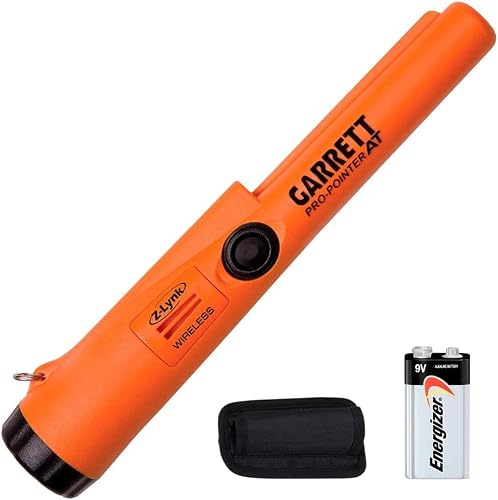
| Pro-Pointer AT Z-Lynk | 20 ft | See listing | Wireless audio to Z-Lynk headphones |
| Minelab Pro-Find 35 | 3 m (10 ft) | 5 levels | Ferrous tone ID, DIF, flashlight |
| Minelab Pro-Find 40 | Up to 3 m (10 ft) | 5 levels | Ferrous tone ID, DIF, flashlight |
| Nokta AccuPOINT | 10 ft (3 m), IP68 (listing) | See listing | Bluetooth, color LCD, 1-tone/2-tone/iron-off |
Garrett and Minelab figures from their official pages; Nokta from the listing.
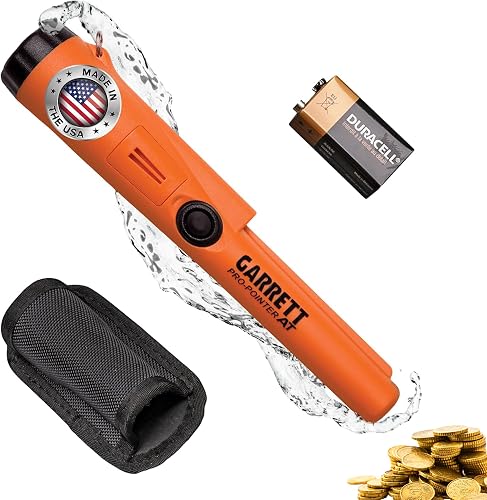
Garrett Pro-Pointer AT
Garrett lists it as submersible to 20 feet (IP68), with fast retune, an LED flashlight, three sensitivity levels, a belt holster, stealth (vibrate-only) mode and a lost-pointer alarm. It runs on a 9V battery and weighs 6.5 ounces. The listing adds a molded inch/cm ruler. Note the Pro-Pointer II is only weatherproof (IP66); Garrett says only its tip may go underwater.
Garrett Pro-Pointer AT
- Submersible to 20 ft, per the listing
- 3 sensitivity levels; fast retune
- One-button control; stealth mode
- Molded inch/cm ruler; lanyard loop
Garrett Pro-Pointer AT Z-Lynk
- Z-Lynk wireless audio with Z-Lynk detectors and headphones, per the listing
- Submersible to 20 ft
- Belt holster and 9V battery included
Minelab Pro-Find 35 and 40
Both list waterproofing to 10 feet, five sensitivity levels, a flashlight, ferrous tone ID to separate iron from non-ferrous targets, and DIF to reduce interference with a running detector, per Minelab and the listings.

Minelab Pro-Find 35
- Waterproof to 10 ft (3 m), per the listing
- DIF tech; ferrous tone ID
- 5 sensitivity levels; audio and vibration
- Flashlight, holster and lanyard

Minelab Pro-Find 40
- Fully waterproof housing, per the listing
- DIF tech to reduce interference with a running detector
- Ferrous tone ID; 5 sensitivity levels
- Audio plus vibration; flashlight, holster and lanyard
Nokta AccuPOINT
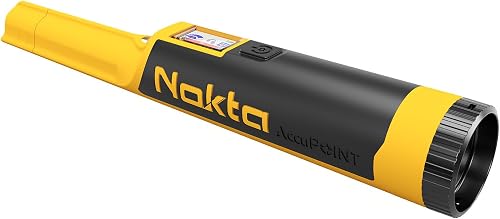
IP68 to 10 feet, Bluetooth audio, 1-tone, 2-tone or iron-off discrimination, and a color LCD showing battery and sensitivity, per the listing.
Nokta AccuPOINT Pinpointer
- IP68 waterproof to 10 ft (3 m), per the listing
- Bluetooth audio
- 1-tone, 2-tone or iron-off discrimination
- Color LCD; volume and backlight control
How to use one
- Pinpoint with the detector first. Garrett's manual says accurate pinpointing lets you recover targets quickly while digging the smallest hole possible. Many detectors have a pinpoint mode.
- Dig a small hole or plug. See digging tools.
- Probe the hole and the dirt with the pinpointer until it signals, then pull the target.
- Refill the hole. Garrett's code of ethics: "I will always fill the holes I dig."
Budget pinpointers
Other brands sell probe pinpointers too. Read the waterproofing carefully: the Dmyond listing says only the probe is waterproof, not the switch or speaker.
SUNPOW Pinpointer (OTMD12)
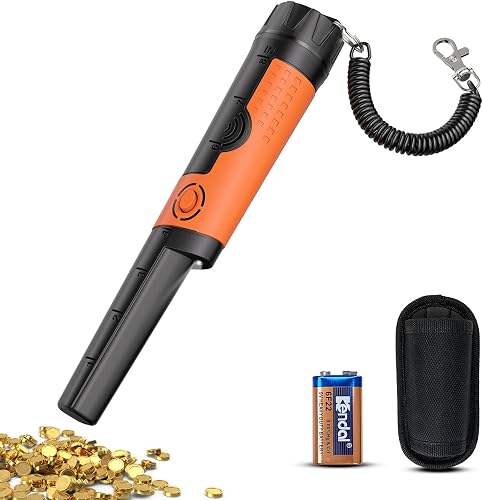
- 360-degree detection, 3.5 in. depth, per the listing
- Sound plus vibration alerts
- Listed IP68 tip; 9V battery included
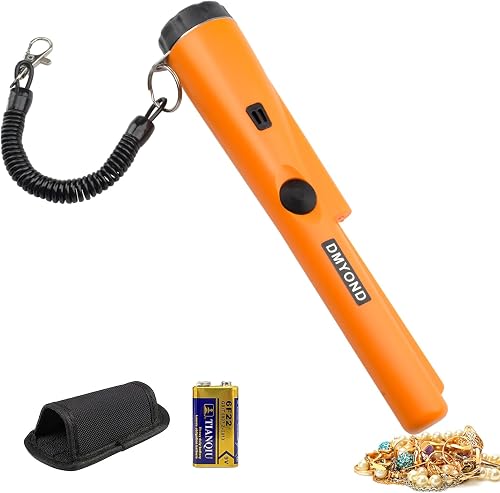
Dmyond Pinpointer
- Single-button probe with LED and sound alarm, per the listing
- Only the probe is waterproof; switch and speaker are not
- 9V battery included
Comparing Garrett and Minelab? See Pro-Pointer AT vs Pro-Find 35. And if your pinpointer and detector both run Z-Lynk, see detector headphones.
FAQ
What does a pinpointer do?
Finds the exact spot so you dig less.
Is the Pro-Pointer AT waterproof?
To 20 feet, per Garrett.
What is DIF?
Minelab's tech to reduce interference with a running detector.