
Gold Sluice Boxes: How They Work, How to Set One Up, and 6 Options
CoilAndCoin is reader-supported. If you buy through our links we may earn a commission at no extra cost to you. As an Amazon Associate we earn from qualifying purchases. Disclosure.
Once you've panned a few buckets by hand, the appeal of a sluice is obvious. You shovel, the creek does the shaking. Here's how they work according to the people who wrote the classic guides, what's on Amazon, and the rules you need to know. We haven't run these sluices ourselves; product details come from the listings.
How a sluice traps gold
Alaska's Division of Geological & Geophysical Surveys explains it well: riffles break up the material flowing over them, slow it down so dense particles settle, form pockets that hold the gold, and create "boils" that roughly sort the material. Hungarian riffles (the transverse kind on many hobby mats) are, in the guide's words, probably the most widely used and a better collector of fine gold, though they can pack with black sand and need frequent cleanups. USGS adds that partly closing the bottom end helps slow the water and trap heavy particles.
Setting one up
- Level across, sloped lengthwise. Alaska's guide says the box should be perfectly level across its width, firmly supported, with a constant grade.
- Grade: 1/2 to 1-1/2 inches of drop per foot; about 1-1/4 inches was typical in Interior Alaska. Too steep washes gold out.
- Water depth: enough to move all but the biggest rocks, but no more than half the box width.
- Feed classified material. Screening first helps, and Washington's rules require it in some situations (below).
- Check yourself. About 80 percent of your gold should be in the first few feet of riffles. Pan your tailings now and then to see what you're losing.
We couldn't find an official step-by-step for cleanup. In general you pull the mat, wash it into a tub, and pan the concentrate down; see how to pan for gold.
Six sluices, compared
| Sluice | Size (per listing) | Notable |
|---|---|---|
| ASR Outdoor | 34.5 x 14 in.; 5.2 lb | Rubber mat with 3 riffle types; shoulder strap |
| Prospector's Dream 8x38 | 8 x 38 in. | 16-gauge aluminum; 3-stage mat |
| Prospector's Dream 6x24 Trek | 6 x 24 in. | Backpack size; 3-stage design; Vortex Dream Mat |
| Sluice Fox 36 in. | 36 in. | Classifier mounted at the header |
| VEVOR 50 in. | 50 x 9 in. | Folds; miner's moss; pocket scale |
| VEVOR 50 in. kit | 50 in. | 23-piece kit with pans and classifiers |
ASR Outdoor 34 inch
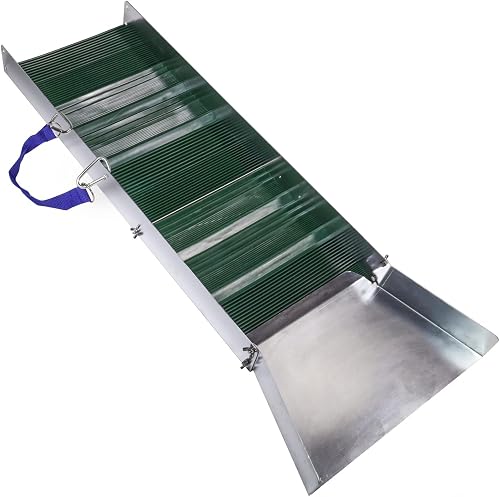
An aluminum box with a rubber mat that combines Hungarian, V-shaped and square riffles, a 10 inch channel and a shoulder strap, 5.2 pounds, per the listing.
ASR Outdoor 34 in. Aluminum Sluice Box
- 34.5 x 14 x 2.5 in. assembled; 5.2 lb, per the listing
- Rubber TPR mat with Hungarian, V-shaped and square riffles
- 10 in. channel; shoulder strap included
Prospector's Dream 8x38 and 6x24
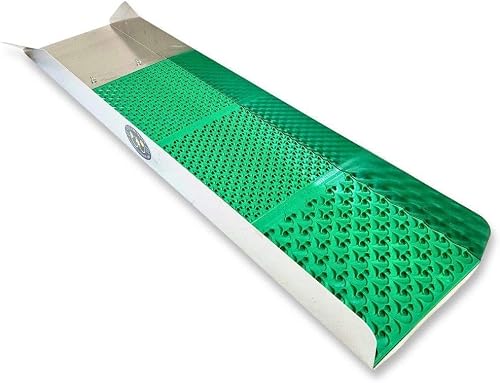
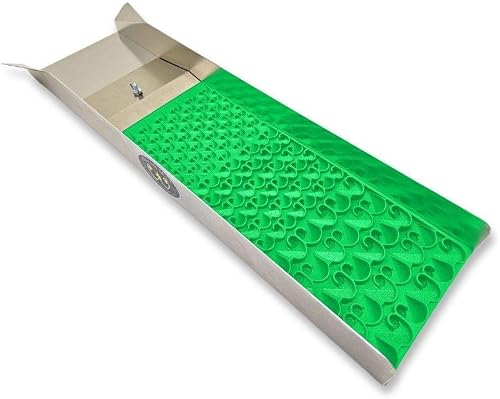
Both use the maker's Dream Mat; the 8x38's is 3-stage. The 8x38 is 16-gauge aluminum with a wing-nut clamp holding the mat; the 6x24 Trek is the smaller backpacking version, per the listings.
Prospector's Dream 8x38 Compact Combo Sluice
- 8 x 38 in. 16-gauge aluminum, per the listing
- 3-stage Dredge Dream Mat
- Wing nut clamp holds the mat down; sized for a backpack
Prospector's Dream 6x24 Trek Sluice Combo
- 6 x 24 in. backpack sluice, per the title
- Vortex Dream Mat with Micro and Mini mat sections
- 3-stage sluice design
Sluice Fox 36 inch
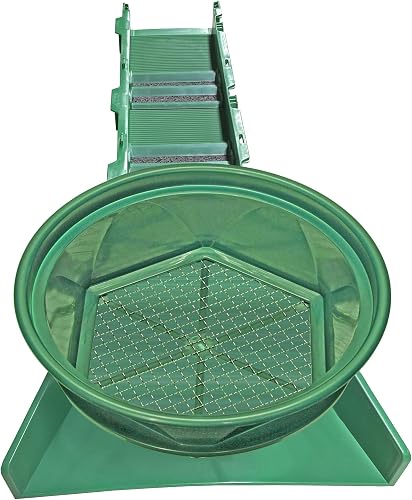
Has a classifier mounted right at the head, so you can screen and feed in one spot, per the listing.
Sluice Fox 36 in. Speed Feed Sluice with Classifier
- 36 in. sluice with a classifier mounted at the header, per the listing
- Backpack sluice with pay dirt bucket sifter (title)
VEVOR 50 inch
Folds for carrying, with built-in riffles over woven vinyl miner's moss, and comes with a pocket scale, per the listing. The kit version adds pans, classifier screens, a magnet and more.
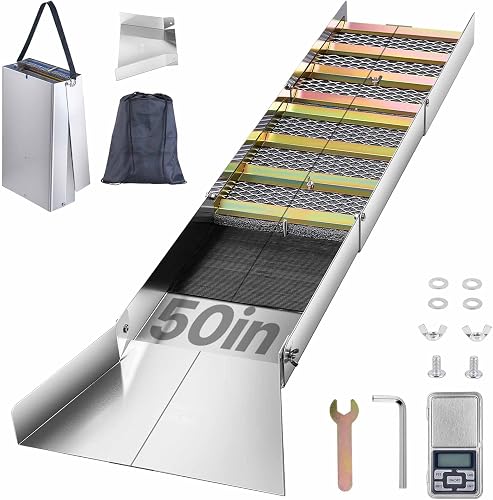
VEVOR 50 in. Folding Aluminum Sluice Box
- 50 x 9 x 2.6 in. folding aluminum, per the listing
- Built-in riffles over woven vinyl miner's moss
- Pocket scale included (200 g, 0.01 g)
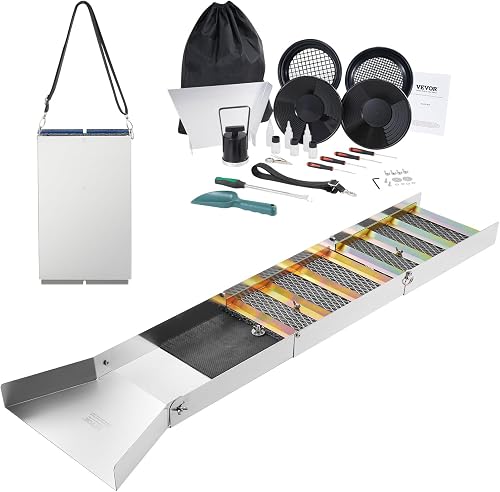
VEVOR 50 in. Sluice Box Gold Panning Kit
- 50 in. folding aluminum sluice with miner's moss, per the listing
- 23 pieces: 2 pans, 2 classifier screens, magnet, snuffer bottles, vials, scoop and more
- Carry bag with shoulder straps
Finishing your concentrate
A Gold Cube is a fine-gold concentrator: you run classified concentrate through stacked trays. The 3 Stack Deluxe listing includes trays, a stand, pump and hose, and says to classify material to 1/8 inch.
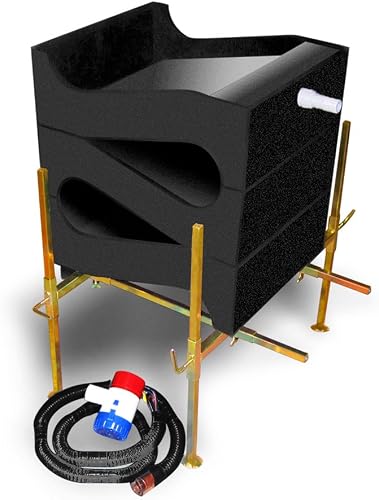
Gold Cube 3 Stack Deluxe
- Fine gold concentrator: slick plate, 2 separator trays, stand, pump and hose, per the listing
- Listed to run material classified to 1/8 in.
- Made in the USA
The rules
- BLM: 43 CFR 3809.5 counts non-motorized sluicing as casual use. Some field offices are stricter, so check locally.
- Forest Service: 36 CFR 228.4 lists non-motorized hand sluicing among activities that don't need a notice of intent. The Black Hills NF says motorized equipment or suction dredges require a Notice of Intent. Rules vary by forest.
- Washington: the WDFW Gold and Fish pamphlet serves as your permit for non-motorized sluices. Year-round, total riffle area is limited to 3 square feet; the sluice can't be wider than 25 percent of the wetted stream; and you must fill holes and level tailings.
- California: CDFW says suction dredging is prohibited statewide, but the law doesn't restrict non-motorized recreational mining like panning.
- Oregon: DEQ says hand sluices and rocker boxes don't need registration, but you must keep a copy of the 700-PM permit on hand and follow it.
This isn't legal advice. Rules change and vary by agency and state; confirm with the land manager and state agencies before you set up.
FAQ
What angle?
1/2 to 1-1/2 inches of drop per foot, per Alaska's guide.
Do I need a permit?
Often not for non-motorized sluicing on federal land, but states add rules. Check locally.
Is it working?
Most gold should be in the first few feet of riffles.